
Adjust Your Screen    Default  High Contrast  Text Only
Adjust Your Font Size    -Aa  Aa  +Aa
  • Skip to main content
  • Social Security
  • Social Security's Work Site
  • For Beneficiaries
  • For Service Providers
  • User Settings expanding dropdown menu arrow
Ticket to Work logo SSA Logo
Access to Employment Support Services for Social Security Disability Beneficiaries Who Want to Work
SSA Logo
  • Home
  • About
    How it Works Work Incentives Meet Your Employment Team FAQs Ticket Dictionary Get Started Today
  • Success Stories
    Stepping Stones
  • Find Help
  • Find a Job
  • Webinars
    WISE On Demand
  • Videos
  • Library
    Recent Success Stories Fact Sheets and Resources Videos
    Federal Employment Initiatives
    Schedule A - FAQs Section 503 for Federal Contractors
    Timely Progress Review Wage Reporting
    Your Path to Work
    Phase 1: Ticket to Work Phase 2: Ready to Work Phase 3: Getting a Job Phase 4: Managing Your Job
  • Blog
  •    expanding dropdown menu arrow
  •    expanding dropdown menu arrow
  • Contact
Facebook Close Icon
/

Social Security makes every effort to ensure that any information published is accurate and up to date, but some information on this webpage may be historical.

Breadcrumb

  • You are here:
  • Home
  • Ticket To Work Blog
  • Ticket To Work Blog
How to Get Started with Ticket to Work in 3 Simple Steps

Three framed graphics in a row on a wall. The first says "Explore", with a magnifying glass icon. The second says, "Learn", with a shining lightbulb icon. The third says, "Connect", with an icon of three people connected by a circle. Thinking about work? You don’t have to have a job goal, a resume, or a plan in place to get started with Social Security’s Ticket to Work (Ticket) Program. No matter where you are on your journey to financial independence, Ticket to Work is here to help.

If you receive Social Security disability benefits (SSDI/SSI) due to your disability and are ages 18 through 64, you may be eligible to participate in the Ticket Program.

The Ticket Program connects you with free employment support to help you explore work, prepare for a job, find work, or succeed at a job you already have. You can get started wherever you are on your journey, even if you’re only beginning to wonder whether work might be right for you.

Here are three simple steps to get started.

Quick Start

  1. Explore whether work is right for you and how work can fit into your goals and life.
  2. Learn how Ticket to Work can support you with free employment support.
  3. Connect with a service provider who can help you explore your options and take your next step.

Step 1: Explore Whether Work Could Be Right for You

You don’t need to be ready to work to start exploring your options. Maybe you have wondered what kind of job you would be best suited for. Maybe you would like to earn money, develop new skills, or work toward greater financial independence. Or maybe you haven’t thought much about working at all but are curious about what’s possible. That’s OK. The Ticket Program is designed to meet you where you are.

You can learn more about the program, explore your options, and consider how work could fit into your life. You don’t have to have all the answers before you take your next step. The important thing is to start exploring.

Step 2: Learn How Ticket to Work Can Support You

The Ticket Program offers free support from authorized service providers, including Employment Networks (EN) and State Vocational Rehabilitation (VR) agencies.

Depending on your needs and goals, your employment team may help you:

  • Explore your work options and create your Individual Work Plan
  • Identify your strengths and interests
  • Prepare for and find a job
  • Develop job skills or pursue training
  • Understand how earnings from work will affect your benefits
  • Get support after you start working
  • Help you identify and ask for reasonable accommodations

You also don’t need to know which type of service provider is right for you before you get started. A service provider can help you understand your options and determine what support may be a good fit. The first step is to learn what services each provider offers and what you might need.

Step 3: Connect with a Service Provider

Use our Find Help tool to connect with a Ticket Program service provider today. You don’t have to be ready to work immediately. You just have to be ready to explore what’s possible.

You can search by ZIP code, disability type, languages, provider type, or services offered. It also includes a Guided Search that helps you understand your readiness for work and suggests providers who may be a good fit.

Once you find a provider you might like to work with, contact them. You can discuss where you are now, what you are thinking about, and what kind of support you might need. If you and a service provider agree to work together, you can assign your Ticket to that provider. You don’t need a paper Ticket; your provider can verify your eligibility.

Final Thoughts

You don’t have to figure it all out first. One of the biggest benefits of getting connected with a service provider is that you don’t have to figure everything out before you reach out. You can be thinking about work; you can be curious about what work might look like; and you can have questions about your benefits or what kind of job might be right for you. You can start there. A Ticket Program service provider can help you explore your options, answer questions, and determine what steps make sense for you.

For additional support, call the Ticket to Work Help Line at 1-866-968-7842 or 1-866-833-2967 (TTY) for callers who are deaf, hard of hearing, or have a speech disability. Hours are Monday through Friday, 8 a.m. - 8 p.m. ET, or send us an email at TicketToWork@ssa.gov.

Not Sure You’re Ready to Work? Ask Yourself These 7 Questions

A graphic with 7 question marks in speech bubbles, and a hand holding another speech bubble with an illustration of a shining lightbulb in it.Deciding whether to begin work or return to work is a personal choice. If you're receiving Social Security disability benefits, you may have questions about your health, your finances, or whether you're ready to make a change.

The good news is that you don't have to have everything figured out before you begin exploring your options. Sometimes, asking yourself a few thoughtful questions can help you decide what the right next step looks like.

Here are seven questions to consider:

1. Why Am I Thinking About Working?

People consider work for many reasons. Maybe you'd like to earn more income, want to meet new people, miss having a daily routine, or are ready for a new challenge. There isn't a "right" reason to explore work; what matters is that your reason is meaningful to you.

Think about what has changed recently. What's motivating you to consider employment now?

2. What Concerns Me Most About Going to Work?

You may worry about working for many reasons, including getting to and from work, wondering if you’ll be able to do well on the job, or thinking about how your earnings from work might affect your benefits.

When you participate in the Ticket to Work Program, your employment team will help you:

  • Clarify your work goals
  • Build a resume or update an existing one to reflect your current experience
  • Identify job opportunities
  • Receive ongoing support after you start working

Once you and your service provider decide to work together, you will collaboratively develop a plan to help you reach your work goals. Your employment team will then help you make progress towards those goals and, eventually, a more financially independent future.

3. What Are My Strengths?

Instead of focusing only on limitations, think about what you bring to the workplace.

Ask yourself:

  • What skills have I developed through work, school, volunteering, clubs, or everyday life?
  • What do friends or family say I'm good at?
  • What tasks do I enjoy?

Everyone has strengths, and recognizing yours can help you identify opportunities that fit your interests and abilities.

4. What Kind of Work Would Fit My Life Right Now?

Not every job looks the same. Would you prefer:

  • Part-time or full-time work?
  • A flexible schedule?
  • Remote or in-person work?
  • A physically active or sedentary job?

Thinking about your preferences can help focus your options and make work feel more achievable.

5. What Support Would Help Me Succeed?

Many people benefit from support as they prepare for work.

You might want help with:

  • Exploring careers
  • Updating your resume
  • Preparing for interviews
  • Understanding how work will affect your benefits
  • Finding training opportunities
  • Building confidence

The Ticket to Work Program connects eligible beneficiaries with service providers that can offer guidance and support based on your goals.

6. Am I Ready to Take One Small Step?

You don't have to decide today whether you’re ready to start working.

Maybe your next step is simply learning more about your options, talking with an Employment Network (EN), your State Vocational Rehabilitation (VR) agency, or updating your resume.

Progress often starts with one small action.

7. What Would Success Look Like for Me?

Success means something different to everyone.

For one person, it might be working a few hours each week. For another, it could mean building a long-term career. Others may simply want to learn about their options and explore what's possible.

Your employment journey doesn't have to look like anyone else's. The important thing is that you define success in a way that reflects your own goals and priorities.

You Don’t Have to Decide Alone

If you're asking yourself whether you're ready to work, you have already taken an important first step by exploring your options.

You don't need to have all the answers before reaching out for support. An EN or your State VR agency can help you learn about your options, answer questions about work and benefits, and help you decide what comes next.

Whether you're ready to apply for jobs or simply want to gather information, taking one small step today can help you move toward the future you want.

Ready to Learn More?

  • Attend a free WISE webinar to learn how the program works and get answers to common questions.
  • Visit the Ticket to Work website to explore resources and read more about your options.
  • Use the Find Help tool to connect with service providers that can help you reach your goals.

For personalized support, you can contact the Ticket to Work Help Line at 1-866-968-7842, Monday through Friday, 8 a.m. to 8 p.m. ET. Specially trained representatives are available to answer many of your questions about disability benefits and Social Security Work Incentives. For callers who are deaf, hard of hearing, or have speech disabilities, you can call our TTY at 1-866-833-2967. You can also email us at TicketToWork@ssa.gov.

Discover Who’s Hiring Now

Two people talking to each other across a table at a job fair.Job fairs are one of the most powerful — and often overlooked — ways to meet real employers, uncover new opportunities, and make a lasting impression beyond an online application. Whether you’re searching for your very first role or looking to make a bold career move, the right job fair can open doors you didn’t even realize were there. With several exciting events just around the corner, now is the perfect time to explore what’s ahead and start planning your next big step.
Social Security's Ticket to Work Program supports people ages 18 through 64 who receive Social Security Disability Insurance (SSDI) or Supplemental Security Income (SSI) at every stage of their path to work. Even if you find a job on your own, the Ticket Program can still help you build your skills and confidence. Service providers can offer resume reviews, interview practice, help with workplace accommodations, and guidance as you plan for your financial future. They’re also ready to help you make the most of new opportunities, including job fairs happening in your area.

Below is a sample of this month’s career fairs, both online and across the country. To get full details about any event and to register, use the links provided.

If you know about an upcoming job fair that our readers might find useful, email us at TTWsocialmedia@ssa.gov with the event name, dates, and official website.

CareerEco

  • September 30: Disability Virtual Career Fair

Hiring Our Heroes

Hiring Our Heroes connects the military community — service members, military spouses, military caregivers, and veterans — with American businesses to create economic opportunity and a strong workforce.

  • September 15: Career Summit at Buckley Space Force Base – Buckley SFB, CO
  • September 16: Virtual Military Spouse Hiring Event
  • September 23: Virtual Hiring Fair: Security Clearance Job
  • September 30: Virtual Career Summit

Job FairX

Find your next job at one of these virtual job fairs hosted this month.

  • September 10: Technology Virtual Job Fair – Miami, FL
  • September 15: Healthcare Virtual Job Fair – Cary, NC
  • September 23: Entry-Level Virtual Job Fair – Springfield, IL

RecruitMilitary

RecruitMilitary seeks to tap into the extensive talent pool that veterans represent for employers.

  • September 17: Atlanta Veterans Job Fair – College Park, GA
  • September 22: Eastern Region Virtual Career Fair
  • September 24: Job Fair at Fort Drum – Fort Drum, NY

USAJOBS

USAJOBS is the federal government's official employment site. As part of the U.S. Office of Personnel Management (OPM), USAJOBS helps recruit and retain a world-class government workforce. USAJOBS connects job seekers with federal employment opportunities across the United States and around the world. Some of the career fairs listed below are hosted by the federal government, while others are organized by external groups that include federal participation.

USAJOBS is constantly adding events and employment opportunities throughout the month as federal, state and local opportunities arise. If you do not see an opportunity that fits you below, we recommend continuing to check USAJOBS throughout the month for new events.

  • September 24: IRS Career Opportunities for Veterans and Military Spouses

State-Specific Hiring

State, county, and city job fairs happen locally year-round. From large private employers hosting events for a region, to state and city employment opportunities, local governments are a great place to connect with resources like a Workforce EN or your State VR agency that can connect you with resources local to you.The listings below are a sampling of state-specific events happening throughout the nation during the month. To find out about your state’s current employment events, visit USA.gov's State Government List and select your state or territory from the dropdown list provided.

  • September 15: North STAR Hiring Event – Vacaville, CA
  • September 24: KANSASWORKS Virtual Statewide Job Fair
  • September 29: Hope Ministries the Way to Work Career Fair

Want more tips on state and local fairs? How to Find Job Fairs Using State and Local Resources can help.

Looking for More Support?

If you’d like extra support as you prepare for these events, the Ticket to Work Program is ready to help. A service provider can offer guidance on what to expect, help you strengthen your resume and interview materials, and provide ongoing support as you move forward in your job search. With the right resources, each event can become a valuable part of your path toward work.

Learn More

To learn more about how the Ticket to Work Program can support your journey, start by using the Find Help tool at choosework.ssa.gov/findhelp to connect with a service provider. You can also join a free online Work Incentives Seminar Event (WISE) webinar to explore how work and benefits can fit together.

If you have questions, call the Ticket to Work Help Line at 1-866-968-7842 or 1-866-833-2967 (TTY), Monday through Friday, 8 a.m. to 8 p.m. ET. Text TICKET to 1-571-489-5292 for program updates. Standard messaging rates may apply, and you can opt out at any time.

Your Guide to Reasonable Accommodations With Ticket to Work

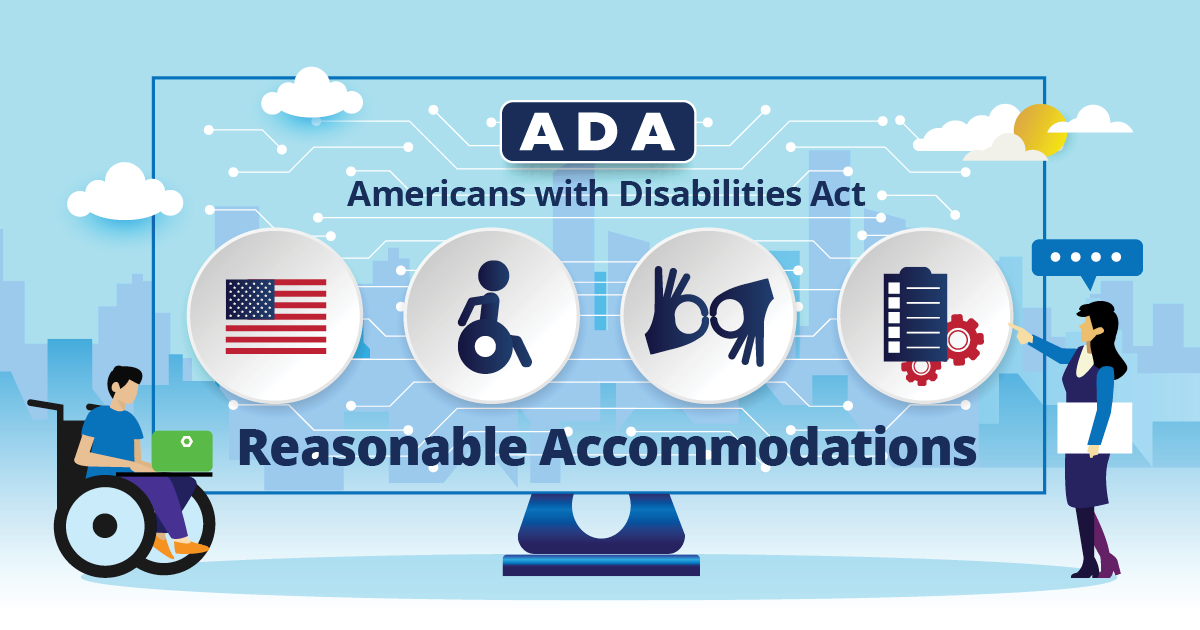
An illustration of an oversized computer monitor, with a city skyline in the background. On the monitor is a row of images, including an American flag, and icons for wheelchair access, ASL, and documents. It says, "ADA. Americans with Disabilities Act. Reasonable Accommodations." Next to the monitor is a person using a wheelchair, working on a laptop, and a person pointing to the monitor, with a text bubble above that has 4 dots in it.Finding the right supports at work can make a big difference in your success, especially if you need reasonable accommodations to do your job effectively. But knowing how to ask for accommodations — and feeling confident throughout the process — can sometimes be challenging. That’s where Social Security’s Ticket to Work Program can help.

Through free, personalized employment services, Ticket to Work service providers can guide you as you explore your options, understand your rights, and communicate your needs. Whether you’re preparing for a job interview, starting a new job, or already working, the Ticket Program can help you take the next step with confidence.

If you qualify for the Ticket Program, you will work with service providers who offer free employment services, including job coaching, benefits counseling, and ongoing support. These service providers can also help you understand your rights under the Americans with Disabilities Act (ADA), identify the types of accommodations that might help you succeed, and prepare to request them from an employer.

Understanding Your Needs

As you begin exploring work or preparing for a new job, your service provider can help you think through what accommodations may best support you. For example, you may need:

  • Changes to your work schedule
  • Assistive technology
  • Modified job tasks
  • A different way to complete certain responsibilities

Your service provider can explain what has worked for others and help you explore accommodations commonly used across different industries. This process can be especially helpful if you’re unsure what to ask for or want to understand how accommodations can be tailored to your job duties.

Deciding Whether to Disclose

To request a reasonable accommodation, you must disclose your disability to your employer —but only the information needed to explain your request. Deciding what to share is entirely your choice. Your Employment Network (EN) or State Vocational Rehabilitation (VR) agency can help you consider different approaches and reflect on what feels right for you. They can also answer questions about what employers can and cannot ask, helping you feel more empowered before you begin the conversation. When (And Whether) to Tell an Employer about Your Disability goes into this decision in more detail.

Preparing Your Request

Requesting an accommodation doesn’t need to be formal. You can often start by talking with your supervisor or HR representative. Still, many people appreciate having support as they prepare. Your service provider can help you:

  • Clarify what you need and why
  • Draft an email or written request
  • Practice how to discuss accommodations in a meeting
  • Understand what documentation may be required

If you’re not sure how to explain your request, your EN can help you include the most important information and communicate it clearly.

Navigating the Interactive Process

Once you request an accommodation, your employer may suggest alternatives that still help you complete your job tasks. Under the ADA, employers are not required to provide the exact accommodation you request if another effective option is available. This can be confusing, but your service provider is there to help. They can:

  • Review the options offered
  • Help you determine whether an alternative meets your needs
  • Suggest ways to continue the conversation if you feel something isn’t working
  • Offer guidance on presenting additional ideas

Their ongoing support can help you feel empowered and prepared, especially if the process becomes complicated.

Ongoing Support Once You’re Working

The Ticket Program isn’t just for job seekers — it also helps people who are already working. If your needs change on the job or you need new accommodations as your responsibilities evolve, your service provider can help you revisit your options and request updates.

Moving Forward with Confidence

Reasonable accommodations can be a powerful tool to help you succeed at work, and you don’t have to figure it all out alone. Through the Ticket to Work Program, you can access free, personalized support to explore your options, understand your rights, and move forward with confidence. Whether you’re preparing for your first job search or already working and need updated accommodations, the Ticket Program is here to help you thrive.

Ready to Learn More?

Here are a few ways to get started:

  • Use the Find Help tool to connect with a service provider who can support your employment journey.
  • Prefer a learning-first approach? Register for an upcoming WISE webinar to explore accommodations, Work Incentives, and employment supports designed for SSDI and SSI beneficiaries.
  • Want one-on-one guidance? Connect with a Ticket to Work service provider today and get personalized help tailored to your goals, needs, and career plans.
  • Call the Ticket to Work Help Line. The Help Line can answer questions about eligibility, services, and what the program offers. This is a simple way to get clear information from someone who understands the process.
  • Contact the Ticket to Work Help Line at 1-866-968-7842. For callers who are deaf, hard of hearing, or have a speech disability, call 1-866-833-2967 (TTY). Hours are Monday through Friday, 8 a.m. - 8 p.m. ET, or send us an email at TicketToWork@ssa.gov.
Ready to Work? These Employers Are Hiring!

People sitting across from each other at a table talking. A blue banner at the bottom of the image reads, "career fairs."Job fairs are one of the most powerful — and often overlooked — ways to meet real employers, uncover new opportunities, and make a lasting impression beyond an online application. Whether you’re searching for your very first role or looking to make a bold career move, the right job fair can open doors you didn’t even realize were there. With several exciting events just around the corner, now is the perfect time to explore what’s ahead and start planning your next big step.

Social Security's Ticket to Work Program supports people ages 18 through 64 who receive SSDI or SSI at every stage of their path to work. Even if you find a job on your own, the Ticket Program can still help you build your skills and confidence. Service providers can offer resume reviews, practice interviews, help with workplace accommodations, and guidance as you plan for your financial future. They’re also ready to help you make the most of new opportunities, including job fairs happening in your area.

Below is a sample of this month’s career fairs, both online and across the country. To get full details about any event and to register, use the links provided.

If you know about an upcoming job fair that our readers might find useful, email us at TTWsocialmedia@ssa.gov with the event name, dates, and official website.

Hiring Our Heroes

Hiring Our Heroes connects the military community — service members, military spouses, military caregivers, and veterans — with American businesses to create economic opportunity and a strong workforce.

  • August 5: Virtual Hiring Fair: Northeast & Mid-Atlantic US Region
  • August 11: MCAS Yuma Career Summit
  • August 12: Virtual Hiring Event Fair: Southern U.S. Region
  • August 19: Virtual Hiring Fair: Midwestern U.S. Region
  • August 26: Virtual Hiring Fair: Western U.S. Region

Job FairX

Find your next job at one of these virtual job fairs hosted this month.

  • August 13: Technology Virtual Job Fair – Norman, OK
  • August 19: Healthcare Virtual Job Fair – Los Angeles, CA 
  • August 21: Entry-Level Virtual Job Fair – Chicago, IL

RecruitMilitary

RecruitMilitary seeks to tap into the extensive talent pool that veterans represent for employers.

  • August 13: Job Fair at Joint Base Lewis-McChord – Joint Base Levis McChord, WA
  • August 19: Denver Veterans Job Fair – Denver, CO 
  • August 25: National Virtual Career Fair
  • August 27: Indianapolis Veterans Job Fair - Indianapolis, IN

USAJOBS

USAJOBS is the federal government's official employment site. As part of the U.S. Office of Personnel Management (OPM), USAJOBS helps recruit and retain a world-class government workforce. USAJOBS connects job seekers with federal employment opportunities across the United States and around the world. Some of the career fairs listed below are hosted by the federal government, while others are organized by external groups that include federal participation.

USAJOBS is constantly adding events and employment opportunities throughout the month as federal, state and local opportunities arise. If you do not see an opportunity that fits you below, we recommend continuing to check USAJOBS throughout the month for new events.

  • August 6: Minot AFB NAF Back-to-School Rapid Hiring Job Fair – Same Day Job Offers – Minot AFB, ND
  • August 17-18: Direct Hiring Event – United States Medical Center for Federal Prisoners (USMCFP) – Springfield, MO

State-Specific Hiring

State, county, and city job fairs happen locally year-round. From large private employers hosting events for a region, to state and city employment opportunities, local governments are a great place to connect with resources like a Workforce EN or your State VR agency that can connect you with resources local to you.

  • August 12: New York State (NYS) Office of Children and Family Services (OCFS) – Recruitment- Brooktondale, NY
  • August 13: South-Mid Area Job Fair – Southaven, MS
  • August 20: Hiring Event | Viceroy Home Health – Ocala, FL 
  • August 27: Anchorage Career Fair – Anchorage, AK

Want more tips on state and local fairs? How to Find Job Fairs Using State and Local Resources can help.

Looking for More Support?

If you’d like extra support as you prepare for these events, the Ticket to Work Program is ready to help. A service provider can offer guidance on what to expect, help you strengthen your materials, and provide ongoing support as you move forward in your job search. With the right resources, each event can become a valuable part of your path toward work.

Learn More

To learn more about how the Ticket to Work Program can support your journey, start by using the Find Help tool at choosework.ssa.gov/findhelp to connect with a service provider. You can also join a free online Work Incentives Seminar Event (WISE) webinar to explore how work and benefits can fit together.

If you have questions, call the Ticket to Work Help Line at 1-866-968-7842 or 1-866-833-2967 (TTY), Monday through Friday, 8 a.m. to 8 p.m. ET. Text TICKET to 1-571-489-5292 for program updates. Standard messaging rates may apply, and you can opt out at any time.

When (And Whether) to Tell an Employer about Your Disability

Two people talking to each other as they sit on opposite sides of a desk in an office.Searching for a job comes with a lot of decisions: what roles to apply for, how to highlight your strengths, and how to prepare for interviews. On top of that, you may also be wondering: Do I need to tell an employer about my disability? And if so, when?

The short answer: disclosure is your choice. There is no one-size-fits-all answer, but understanding your options can help you make the decision that works best for you.

What Does “Disclosure” Mean?

Disclosing your disability means sharing information about your condition with an employer or potential employer. This can happen at different points in the job search process, or not at all.

You are not required to disclose your disability on a job application, in your resume, or during an interview unless you are requesting an accommodation related to your disability.

Deciding to Disclose

People choose to disclose for different reasons. Some common situations include:

To request a reasonable accommodation. If you need an adjustment, like a modified schedule, assistive technology, or an accessible interview location, you will likely need to disclose enough information to explain your request.

To explain a gap in employment. Some people feel more comfortable addressing time away from work by sharing that it was related to a disability.

To highlight strengths or lived experience. In some roles, your experience coping with or managing your own disability may be an asset, especially in fields like advocacy, peer support, or customer service.

After receiving a job offer. Some people wait until they have an offer in hand before deciding whether to disclose and request accommodations.

There is no “right” moment — only what feels appropriate for your situation.

Reasons You Might Choose Not to Disclose

Just as valid, some job seekers decide not to disclose. You might choose this path if:

  • You do not need accommodations
  • You prefer to keep your medical/disability-related information private
  • You are concerned about bias or misunderstanding

Remember, your skills, experience, and goals are what define your candidacy as an employee.

How Ticket to Work Service Providers Can Help

You don’t have to figure this out on your own. Your Ticket to Work employment team, like Employment Networks (EN) and State Vocational Rehabilitation (VR) agencies, are there to support you every step of the way.

They can help you:

  • Weigh the pros and cons of disclosure based on your goals and comfort level
  • Practice how to talk about your disability in a way that feels comfortable and clear
  • Request reasonable accommodations including how to communicate with employers
  • Understand your workplace rights under disability laws
  • Prepare for interviews and navigate tricky questions

They have worked with many job seekers facing similar decisions and can offer guidance tailored to your situation.

A Few Things to Keep in Mind

Keep it simple: If you do disclose, you do not need to share detailed medical information, just what’s necessary.

Focus on your abilities: Highlight the skills and abilities you bring to the role and how they position you for success. What unique value can you offer that other candidates may not?

Plan before your interview: Think through what you want to say before interviews or conversations with employers.

Know your rights: Understanding your protections can help you feel more confident in your choices.

You Are in Control

Deciding whether to disclose your disability is personal. What matters most is that you feel informed, prepared, and supported.

The Ticket to Work Program is here to help you explore your options and move toward employment on your terms. If you are unsure about your next step, consider reaching out to your service provider; they are ready to help you weigh your options.

Ready to get started? Connect with a Ticket to Work service provider today and take the next step toward your employment goals.

Learn More

To learn more about how the Ticket to Work Program can support your journey, start by using the Find Help tool at choosework.ssa.gov/findhelp to connect with a service provider. You can also join a free online Work Incentives Seminar Event (WISE) webinar to explore how work and benefits can fit together.

If you have questions, call the Ticket to Work Help Line at 1-866-968-7842 or 1-866-833-2967 (TTY), Monday through Friday, 8 a.m. - 8 p.m.; ET. You can also email TicketToWork@ssa.gov. To stay updated, text TICKET to 1-571-489-5292. Standard messaging rates may apply, and you can opt out at any time.

From Conversations to Careers: Networking with Ticket to Work

Two people sit at a table outdoors, engaging in conversation. Both have coffee cups. The person on the left gestures expressively as the other listens intently.Did you know that 70% of jobs are found through networking? (Source: U.S. Bureau of Labor Statistics). Whether you’re job searching or already employed, building and maintaining connections can open new doors. But what does networking really mean? It’s simply the exchange of information and support between people.

It’s as easy as:

  • A conversation with a friend.
  • Talking with someone about your employment goals.
  • Sharing information about a great book you read, or emailing an article to someone who you think will like it.
  • Talking to others, formally or informally, about things that matter to you.

At its core, networking is about building and maintaining meaningful relationships. These connections can help you discover new job opportunities or advance to a higher-paying position.

3 Reasons Networking is Important

Why is networking so important when it comes to finding and keeping a job? Building connections can give you access to opportunities you may not find elsewhere and help you stand out to employers. Here are three key reasons to make networking part of your career plan:

  1. It’s all who you know. When a position opens, employers and hiring managers often think of people they already know and trust before posting the job publicly. By building and maintaining professional relationships, you increase the chances that your name comes to mind when new opportunities arise.
  2. It shows commitment to your career. Having a strong network shows that you’re engaged and committed to your field. It allows you to learn more from others, share resources, and contribute to your organization’s success. Staying connected can also put you in a great position when new opportunities or promotions become available.
  3. Networking helps you learn and grow. Connecting with others in your field gives you insight into industry trends, skill requirements, and career paths. These conversations can help you stay informed, build confidence, and discover new directions for your professional growth.

3 Tips for Networking

Networking can happen anywhere: online, in your community, or through people you already know. Here are three simple ways to start building connections that can help you move toward your career goals.

  1. Consider your personal networks. We often don’t consider people in our daily lives as part of our network, but they can be helpful in your job search. Think about your relatives, friends, neighbors, colleagues, and even acquaintances. Reach out to let them know you’re looking for a job and the type of work you’re seeking. While they may not be able to connect you with a potential employer right away, being aware of your search will help them consider you when they hear of new opportunities.
  2. Connect with leaders on social media. Being active and engaged on social media platforms like LinkedIn and X could open the door for you to meet hiring managers and recruiters. Each connection brings you one step closer to learning about positions or reaching decision makers.
  3. Attend in-person gatherings, conferences, and events. Face-to-face contact is an important way to connect with people. Today, there are many opportunities to meet people, get to know others in your field, exchange information, and talk about professional goals. A couple of examples are finding a group or hobby club that relates to your field of work or finding and joining a local chapter of a professional organization.

Practical Support from a Ticket to Work Employment Team

Social Security’s Ticket to Work (Ticket) Program supports career development for people ages 18 through 64 who receive Social Security disability benefits (SSDI/SSI) and want to work. The Ticket Program is free and voluntary. As a participant, you will have access to an employment team ready to support you on your path to financial independence.

Your Ticket to Work service provider can help you build your network in several ways:

  • Career counseling and coaching: They can teach effective networking strategies, like how to introduce yourself, start conversations, and follow up with contacts.
  • Connecting to employers: Many service providers have relationships with local businesses and organizations, helping participants meet potential employers directly.
  • Workshops and events: They may host or recommend job fairs, networking events, or professional groups where participants can build connections.
  • Resume and LinkedIn support: Ticket Program service providers can help participants create professional materials and online profiles that make networking easier and more effective.
  • Confidence building: Through guidance and practice, service providers help people feel more comfortable reaching out and sharing their skills and goals.

Learn More

Learn more about how Ticket to Work can help you reach your goals! Call the Ticket to Work Help Line at 1-866-968-7842. For callers who are deaf, hard of hearing, or have a speech disability, call 1-866-833-2967 (TTY). Hours are Monday through Friday, 8 a.m. - 8 p.m.; ET; or visit choosework.ssa.gov. You may also email us at TicketToWork@ssa.gov

Ready to Work? These Employers Are Hiring!

A person attending a career fair. Job fairs are one of the most powerful — and often overlooked — ways to meet real employers, uncover new opportunities, and make a lasting impression beyond an online application. Whether you’re searching for your very first role or looking to make a bold career move, the right job fair can open doors you didn’t even realize were there. With several exciting events just around the corner, now is the perfect time to explore what’s ahead and start planning your next big step.

Social Security's Ticket to Work Program supports people ages 18 through 64 who receive SSDI or SSI at every stage of their path to work. Even if you find a job on your own, the Ticket Program can still help you build your skills and confidence. Service providers can offer resume reviews, interview practice, help with workplace accommodations, and guidance as you plan for your financial future. They’re also ready to help you make the most of new opportunities, including job fairs happening in your area.

Below is a sample of this month’s career fairs, both online and across the country. To get full details about any event and to register, use the links provided.

If you know about an upcoming job fair that our readers might find useful, email us at TTWsocialmedia@ssa.gov with the event name, dates, and official website.

CareerEco

CareerEco is offering a variety of virtual career fairs this month, open to participants across the nation.

  • June 10: Back-to-School – Education Virtual Career Day
  • June 17: Explore Careers in Higher Ed – All Roles & Experience Levels
  • June 23: STEM Virtual Career & Grad Fair

Hiring Our Heroes

Hiring Our Heroes connects the military community — service members, military spouses, military caregivers, and veterans — with American businesses to create economic opportunity and a strong workforce.

  • June 10-11: Fort Gordon Career Summit
  • June 16: Keesler Air Force Base Career Summit
  • June 17: Virtual Military Spouse Hiring Event
  • June 24: Virtual Career Summit

Job FairX

Find your next job at one of these virtual job fairs hosted this month.

  • June 9: Boston, MA Entry-Level Virtual Job Fair
  • June 17: New Orleans, LA Healthcare Virtual Job Fair
  • June 19: Schaumburg, IL Entry-Level Virtual Job Fair
  • June 23: Round Rock, TX Healthcare Virtual Job Fair

RecruitMilitary

RecruitMilitary seeks to tap into the extensive talent pool that veterans represent for employers.

  • June 9: Transitioning Service Member & Spouse Virtual Career Fair
  • June 17: Job Fair at Joint Base Pearl Harbor-Hickam
  • June 25: Houston Veterans Job Fair
  • June 30: Eastern Region Virtual Career Fair

USAJOBS

USAJOBS is the federal government's official employment site. As part of the U.S. Office of Personnel Management (OPM), USAJOBS helps recruit and retain a world-class government workforce. USAJOBS connects job seekers with federal employment opportunities across the United States and around the world. Some of the career fairs listed below are hosted by the federal government, while others are organized by external groups that include federal participation.

USAJOBS is constantly adding events and employment opportunities throughout the month as federal, state and local opportunities arise. If you do not see an opportunity that fits you below, we recommend continuing to check USAJOBS throughout the month for new events.

  • June 11: IRS Contact Representative Hiring Event – Jacksonville, FL
  • June 11: IRS Admin Support Positions in Austin, TX, Kansas City, MO, and Ogden, UT
  • June 16-17: IRS Hiring Event – Covington, KY

State-Specific Hiring

State, county, and city job fairs happen locally year-round. From large private employers hosting events for a region, to state and city employment opportunities, local governments are a great place to connect with resources like a Workforce EN or your State VR agency that can connect you with resources local to you. The listings below are a sampling of state-specific events throughout the nation for the month. To find out about your state’s current employment events, visit USA.gov's State Government List and select your state or territory from the dropdown list provided.

  • June 9: Seacoast Region Virtual Job and Resource Fair
  • June 11: Milwaukee Southeast Job Center Job Fair
  • June 18: Independent Electrical Contractors Rocky Mountains (IECRM) Career Fair – Northglenn, CO
  • June 23: Shelby County Career Expo – Columbiana, AL

Want more tips on state and local fairs? How to Find Job Fairs Using State and Local Resources can help.

Looking for More Support?

If you’d like extra support as you prepare for these events, the Ticket to Work Program is ready to help. A service provider can offer guidance on what to expect, help you strengthen your materials, and provide ongoing support as you move forward in your job search. With the right resources, each event can become a valuable part of your path toward work.

Learn More

To learn more about how the Ticket to Work Program can support your journey, start by using the Find Help tool at choosework.ssa.gov/findhelp to connect with a service provider. You can also join a free online Work Incentives Seminar Event (WISE) webinar to explore how work and benefits can fit together.

If you have questions, call the Ticket to Work Help Line at 1-866-968-7842 or 1-866-833-2967 (TTY), Monday through Friday, 8 a.m. to 8 p.m. ET, or text TICKET to 1-571-489-5292 for updates. Standard messaging rates may apply, and you can opt out at any time.

Do You Have Any Questions for Me? Questions to Ask in a Job Interview (and What to Skip!)

Two people having a conversation as they sit across a desk from each other during a job interview.You got the interview — nice work! Now comes an often-overlooked part that could actually help you land the job: asking questions at the end. When the interviewer says, “Do you have any questions for us?” it’s not just small talk — it’s your moment to shine.

In this blog post, we will break down why these end-of-interview questions matter and give you tips on how to ask smart ones that show you are interested, thoughtful, and serious about the role. Let’s make sure your final moments in the interview leave a strong impression.

Why Your Questions Matter

The questions you ask during an interview do more than show you're prepared; they tell the employer you’re truly interested in the role and invested in finding the right fit. Thoughtful questions can highlight your knowledge of the company, help the interviewer picture you in the position, and give you valuable details about what it’s really like to work there.

Asking the right questions also gives you a chance to decide if the job aligns with your goals. Not every opportunity will be the perfect match — and that’s okay. What matters is finding something that works for you.

Below, we will share examples of questions you can ask about different parts of the job to help guide your decision.

What Should You Ask About?

When preparing questions for your interview, think about the different layers of the opportunity. Each one offers insight into whether the role is truly right for you. Here are a few key areas to explore:

The Role

  • What does a typical day look like for someone in this position?
  • What are the biggest challenges someone in this role might face?

Understanding the daily responsibilities and potential hurdles helps you gauge whether you’re ready to meet expectations — and excited to do so.

The Team

  • Can you tell me more about the team I will be working with?
  • How do they typically collaborate and communicate?

Getting a sense of the team dynamic can help you imagine what it’s like to be part of it and whether their working style complements yours.

The Company

When asking questions during an interview, it’s helpful to connect your question to the company’s goals or mission. This shows the interviewer that you have done your research and understand what the organization is trying to achieve.

  • What tasks performance measures are used in this role to help the company reach its goals?
  • How does the company support professional development?

The Interview Process

  • What are the next steps in the interview process?
  • When can I expect to hear from you?

This helps clarify what happens next and shows you are eager to continue the conversation.

Crafting Meaningful Questions

Before the interview, take time to research the company and the role. The more you know, the more thoughtful and relevant your questions will be. Skip anything that is easily answered by the company’s website or job description. Focus instead on questions that show genuine interest and help you determine if this opportunity aligns with your goals.

Tailored questions signal that you are prepared, invested, and thinking beyond the surface.

Questions Best Left for Later

It’s natural to be curious about salary, benefits, or vacation time, but avoid bringing these topics up unless the interviewer initiates the conversation. While these are important factors, diving into them too early can send the wrong signal and shift the focus away from your qualifications and enthusiasm for the role.

Save these conversations for a later stage in the process when the timing is right.

How Ticket to Work Service Providers Can Support You

What is Ticket to Work?

Social Security's Ticket to Work (Ticket) Program supports career development for people ages 18 through 64 who receive Social Security disability benefits (SSDI/SSI) and want to work. Through this free and voluntary program, eligible participants can work with service providers to receive the services and supports they need to find and maintain employment as they move toward financial independence through work.

Navigating the job search process can feel overwhelming. That’s where your Ticket to Work employment team comes in. They are here to guide you every step of the way — from interview preparation to job placement assistance and ongoing support in your new role. Whether it’s helping you craft impactful questions, boost your confidence or explore Work Incentives, they can support you as you strive to reach your employment goals.

Learn More

To learn more about the Ticket to Work Program, call the Ticket to Work Help Line at 1-866-968-7842. For callers who are deaf, hard of hearing, or have a speech disability, call 1-866-833-2967 (TTY). Hours are Monday through Friday, 8 a.m. - 8 p.m.; or visit choosework.ssa.gov.

Discover Who’s Hiring Now

Two people at a desk sitting across from each other. Wording at left reads "Attend a Job Fair" on a yellow background.Job fairs are one of the most powerful — and often overlooked — ways to meet real employers, uncover new opportunities, and make a lasting impression beyond an online application. Whether you’re searching for your very first role or looking to make a bold career move, the right job fair can open doors you didn’t even realize were there. With several exciting events just around the corner, now is the perfect time to explore what’s ahead and start planning your next big step.

Social Security's Ticket to Work Program supports people ages 18 through 64 who receive SSDI or SSI at every stage of their path to work. Even if you find a job on your own, the Ticket Program can still help you build your skills and confidence. Service providers can offer resume reviews, interview practice, help with workplace accommodations, and guidance as you plan for your financial future. They’re also ready to help you make the most of new opportunities, including job fairs happening in your area.

Below is a sample of this month’s career fairs, both online and across the country. To get full details about any event and to register, use the links provided.

If you know about an upcoming job fair that our readers might find useful, email us at TTWsocialmedia@ssa.gov with the event name, dates, and official website.

CareerEco

CareerEco is offering a variety of virtual career fairs this month, open to participants across the nation.

  • May 13: Neurodiversity Virtual Career Fair 
  • May 14: Virtual Fair for Veterans and Military Spouses 

Hiring Our Heroes

Hiring Our Heroes connects the military community — service members, military spouses, military caregivers, and veterans — with American businesses to create economic opportunity and a strong workforce.

  • May 6: Virtual Hiring Fair: Semiconductor Industry 
  • May 13: Virtual Hiring Fair: Energy Industry

Job FairX

Find your next job at one of these virtual job fairs hosted this month.

  • May 6: Queens, NY Healthcare Virtual Job Fair
  • May 8: Berkeley, CA Entry-Level Virtual Job Fair
  • May 22: Orlando, FL Entry-Level Virtual Job Fair
  • May 26: Mobile, AL Healthcare Virtual Job Fair
  • May 29: Norfolk, VA Technology Virtual Job Fair

RecruitMilitary

RecruitMilitary seeks to tap into the extensive talent pool that veterans represent for employers.

  • May 5: Military Spouse Virtual Career Fair
  • May 14: Job Fair at Fort Knox
  • May 19: National Virtual Career Fair
  • May 28: Phoenix Veterans Job Fair

USAJOBS

USAJOBS is the federal government's official employment site. As part of the U.S. Office of Personnel Management (OPM), USAJOBS helps recruit and retain a world-class government workforce. USAJOBS connects job seekers with federal employment opportunities across the United States and around the world. Some of the career fairs listed below are hosted by the federal government, while others are organized by external groups that include federal participation.

USAJOBS is constantly adding events and employment opportunities throughout the month as federal, state and local opportunities arise. If you do not see an opportunity that fits you below, we recommend continuing to check USAJOBS throughout the month for new events.

  • May 5: U.S. Space Force (USSF) STARCOM Professional Hiring Event – Lomco, CA
  • May 5: Joint Base Lewis McChord NAF Hiring Fair
  • May 5: Architect of the Capitol 120th Congressional Moves Hiring Event
  • May 14: U.S. Space Force (USSF) STARCOM Professional Hiring Event – Colorado Springs, CO
  • May 15: IRS Contact Representative In-Person Hiring Event – Ogden, UT

State-Specific Hiring

State, county, and city job fairs happen locally year-round. From large private employers hosting events for a region, to state and city employment opportunities, local governments are a great place to connect with resources like a Workforce EN or your State VR agency that can connect you with resources local to you. The listings below are a sampling of state-specific events throughout the nation for the month. To find out about your state’s current employment events, visit USA.gov's State Government List and select your state or territory from the dropdown list provided.

  • May 12: United States Postal Service Hiring Event – Norfolk, NE 
  • May 12: Rexburg, ID Hiring Event
  • May 13: Delaware Department of Labor Multi-Employer Job Fair and Statewide Training Provider Resource Fair
  • May 18: Autistic Community Activity Program Job Fair – Beaverton, OR
  • May 21: Workforce Solutions – Gulf Coast Metro: Live, Work, Ride Job Fair – Houston, TX
  • May 21: 15th Annual Southern Maryland Hiring Event
  • May 21: Southside Works Career Fair

Looking for More Support?

If you’d like extra support as you prepare for these events, the Ticket to Work Program is ready to help. A service provider can offer guidance on what to expect, help you strengthen your materials, and provide ongoing support as you move forward in your job search. With the right resources, each event can become a valuable part of your path toward work.

Learn More

To learn more about how the Ticket to Work Program can support your journey, start by using the Find Help tool at choosework.ssa.gov/findhelp to connect with a service provider. You can also join a free online Work Incentives Seminar Event (WISE) webinar to explore how work and benefits can fit together. If you have questions, call the Ticket to Work Help Line at 1-866-968-7842 or 1-866-833-2967 (TTY), Monday through Friday, 8 a.m. to 8 p.m. ET, or text TICKET to 1-571-489-5292 for updates. Standard messaging rates may apply, and you can opt out at any time.

Pagination

  • Current page 1
  • Page 2
  • Page 3
  • Next page Next ›
  • Last page Last »
Subscribe to gwalters's blog
Receive Blog Updates
  By Email
  By a Feed
  Opt in to receive information about the Ticket Program via text. Text the word "TICKET" to 1-571-489-5292
  Opt in to receive information about the Ticket Program via text. Text the word "TICKET" to 1-571-489-5292

Categories

Choosing A Provider (16)
Events (142)
Financial Independence (82)
Find A Job (322)
Government Programs (84)
Service Provider Resources (22)
Success on the Job (129)
Success Stories (20)
Ticket to Work (180)
Work Incentives (26)
Young Adults (18)
Graphic with the words 'New Feature' x

Hello, How Can We Help You?

Getting Started 
What is the Ticket to Work Program? 
Social Security's Ticket to Work Program offers free support to help people with disabilities explore work and achieve financial independence: Learn more.
How do I get started with Ticket to Work? 
You can begin by learning about your options and connecting with a service provider: Get started now.
How do I assign my Ticket? 
Assigning your Ticket is easy — just choose a provider and agree to work together: Learn about Assigning Your Ticket.
Working and Benefits 
Can I work and still keep my benefits 
Yes — Work Incentives help you explore employment without immediately losing your benefits: Explore Work Incentives.
How much can I earn while receiving benefits? 
Earnings limits vary, but you can work and still receive benefits with protections in place: Learn about earnings details.
Will I lose Medicare or Medicaid if I start working? 
Many people worry they'll lose Medicare or Medicaid when they start working, but Work Incentives offer protections that help individuals receiving Social Security disability benefits keep their health care coverage while pursuing employment. More Information about Medicare and Medicaid Work Incentives.
Can I work part time with Ticket to Work? 
Yes, and if you're ready, full-time work can offer even more opportunities — with support from Ticket to Work: Discover your options.
Finding Support 
What is the Ticket to Work Program? 
Social Security's Ticket to Work Program offers free support to help people with disabilities explore work and achieve financial independence: Learn more.
How do I get started with Ticket to Work? 
You can begin by learning about your options and connecting with a service provider: Get started now.
How do I assign my Ticket? 
Assigning your Ticket is easy — just choose a provider and agree to work together: Learn about Assigning Your Ticket.
Work Incentives 
What is the Ticket to Work Program? 
Social Security's Ticket to Work Program offers free support to help people with disabilities explore work and achieve financial independence: Learn more.
How do I get started with Ticket to Work? 
You can begin by learning about your options and connecting with a service provider: Get started now.
Who can I contact for more information? 
You can call the Ticket to Work Help Line at 1-866-968-7842 (TTY: 1-866-833-2967) for free support and answers to your questions.

  • About
  • How It Works
  • Work Incentives
  • Meet Your Employment Team
  • FAQs
  • Ticket Dictionary
  • Get Started Today
  • Success Stories
  • Stepping Stones
  • Find Help
  • Find a Job
  • Webinars
  • WISE On Demand
  • Videos
  • Blog
  • Contact
  • Service Provider Outreach Toolkit
  • Library
  • Recent
  • Success Stories
  • Fact Sheets and Resources
  • Videos
  • Federal Employment Initiatives
  • Timely Progress Review
  • Wage Reporting
  • Your Path to Work

Contact the Ticket to Work Help Line       
Call 1-866-968-7842       
1-866-833-2967 (TTY)       
M-F 8 a.m. - 8 p.m. ET

Send Us a Message

Contact the Ticket to Work Help Line       
Call 1-866-968-7842       
1-866-833-2967 (TTY)       
M-F 8 a.m. - 8 p.m. ET

Send Us a Message

  • Disclaimer
  • Privacy & Security Notice
  • Accessibility
  • Site Map
  • FOIA
  • No FEAR Act
  • USA.gov
  • ODEP Disability Resources
  • Benefits.gov
Facebook icon LinkedIn icon X icon YouTube icon back to top icon arrow  

This website is produced and published at U.S. taxpayer expense.